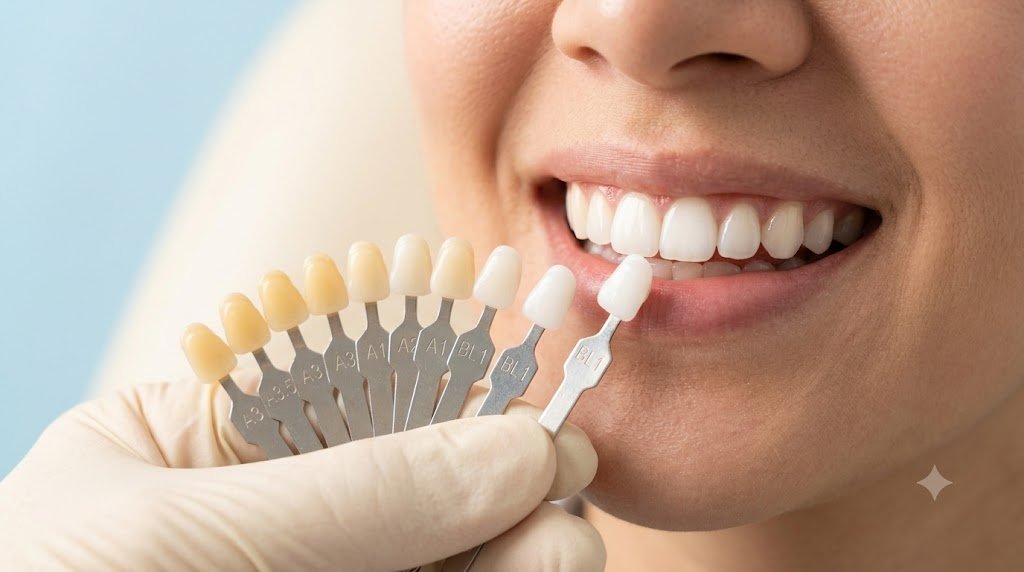
The Three Types of Tooth Staining
Tooth discoloration falls into two categories that require different treatment approaches. Extrinsic staining affects the outer enamel surface and is caused by chromogenic substances including coffee, tea, red wine, dark berries, tomato sauce, soy sauce, tobacco, and chlorhexidine mouthwash. These stains respond well to professional cleaning and whitening. Intrinsic discoloration originates within the tooth structure and is caused by tetracycline antibiotics taken during tooth development, excessive fluoride exposure during childhood, dental trauma that causes internal bleeding, root canal treated teeth where blood breakdown products darken the tooth from inside, and natural aging as enamel thins revealing the yellow dentin underneath.
Matching the Treatment to the Stain
Professional in-office whitening with hydrogen peroxide at 25 to 40 percent concentration effectively treats most extrinsic stains and mild intrinsic discoloration, brightening teeth 4 to 8 shades in one hour. Moderate intrinsic staining may require extended at-home whitening with custom trays over 2 to 4 weeks. Severe intrinsic discoloration such as tetracycline staining or dead tooth darkening may not respond adequately to whitening and instead requires porcelain veneers or crowns for definitive correction.
Frequently Asked Questions
What is the difference between extrinsic and intrinsic stains?
Extrinsic stains sit on the enamel surface from food, drink, and tobacco, and respond well to cleaning and whitening. Intrinsic stains live inside the tooth from injury, medication, or aging, and often need bonding or veneers.
Can all stained teeth be whitened?
No. Whitening works well on yellow surface staining but poorly on gray tones, tetracycline staining, and single dark teeth from nerve damage.
What foods stain teeth the most?
Coffee, tea, red wine, dark sodas, berries, and tomato-based sauces. Rinsing with water after helps limit how much sets into the enamel.
Finding a Dentist in Huntington Beach
If this sounds like what you are dealing with, the next step is an exam. A dentist can tell in minutes what guesswork cannot, and catching a problem early almost always means a smaller, cheaper fix. Tell us what you need using the form below and we will connect you with a licensed dentist serving Huntington Beach and the surrounding Orange County communities. It is free to use and there is no obligation.
Not sure where to start? Read how to choose a dentist, compare prices in our cost guides, or check signs you need emergency care if the pain is severe.
Related Articles
Get Matched with a Huntington Beach Dentist
Tell us what you need and we'll connect you with a vetted, qualified dental professional in your area — free, no obligation.
Free to use · No obligation · Connects you with local dentists
Request an Appointment
Answer 2 quick questions — takes 15 seconds
Are you currently in pain?
What are you interested in?
Almost done! How can we reach you?
By submitting this form you agree that Your HB Dentist, a service of Simple Advertising, Inc., may share the information you provide with one or more local dental practices, and that those practices and we may contact you by phone call, text message, or email at the number and address you provided — including through an automatic telephone dialing system or prerecorded voice — about dental services. Consent is not a condition of purchase. Message and data rates may apply. Reply STOP to opt out of texts. See our Privacy Policy and TermsDo Not Sell or Share My Info.